
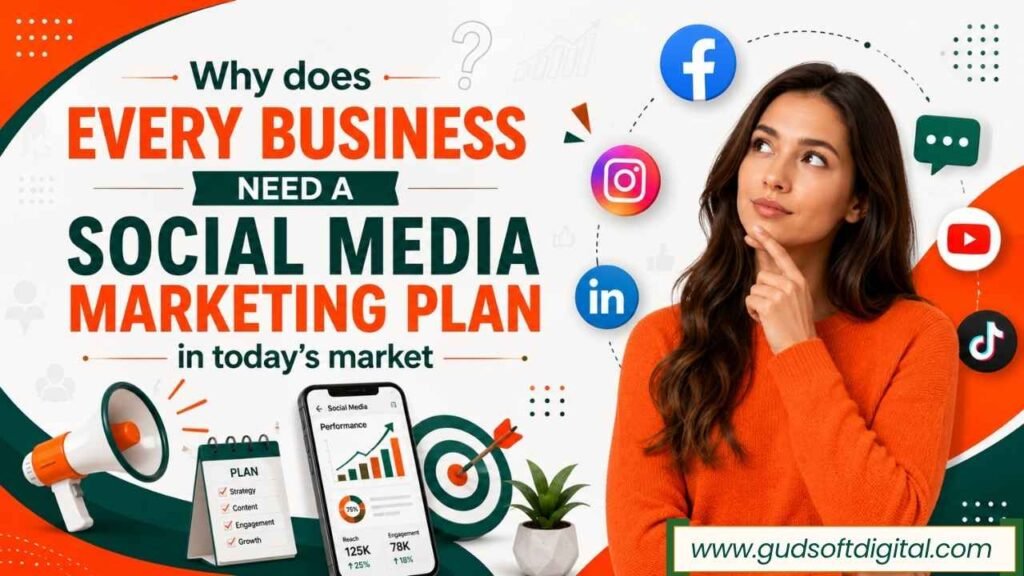
In today’s fast-transpendent Digital World, social media is no longer a place to join with friends-it has become a powerful platform to develop, connect and successful businesses. Whether you are a small startup or global enterprise, brand visibility, customer engagement and long -term development, a structured social media marketing plan is required.
The top reason here is that every business should manufacture and follow the social media marketing plan:
1. Brand enhances awareness
With billions of users being active on platforms such as Facebook, Instagram, LinkedIn and Ticoke, social media offers unique opportunities to reach new audiences. A well -employed strategy continuously ensures branding, attracting businesses to draw new followers, identifying and strengthening relationships with existing customers.
2. Cost effective marketing
Compared to traditional advertisements, social media marketing is far more budget friendly. The installation of accounts is free, and even paid campaigns allow accurate targeting at low cost. A strategic plan ensures that businesses use their budget wisely, produce maximum ROIs.
3. Customer improves engagement and loyalty
Social media gives brands a chance to interact directly with its audience. By sharing valuable materials, responding to comments, and engaging in conversation, businesses can create strong connections. A marketing plan helps to ensure that these interactions are coherent, meaningful and reliable.
4. Provides valuable insight
Social media platforms offer analytics that reveal customer behavior, preferences and demographics. A good plan involves regular analysis of these insights, which helps businesses improve products, services and customer experiences.
5. The website increases traffic and sales
Blog posts, product updates or promotion on social media directs traffic on your website. With the right strategy, businesses can increase click-wealth rates, increase conversion, and eventually increase revenue.
6. Gives a competitive edge
Most of the contestants are already active on social media. A structured plan allows you to study their strategies, spot opportunities and refine your own attitude to stay forward in the market.
7. Brand authority
Constant high quality, informative materials such as guides, case studies and customer success stories, businesses can give themselves as leaders of thought. It creates reliability and confidence among potential customers.
8. Real time allows adaptability
Trends and customer preferences can change overnight. Social media allows businesses to adapt their messages, campaigns or publicity quickly. A marketing plan ensures that your business is flexible and ready to respond to real -time events.
9. Average ensures results
Unlike traditional marketing, social media success can be tracked with devices such as Facebook Insights or Instagram analytics. A plan determines a clear KPI, making it easier to measure progress, adjust strategies and improve performance.
10. Creates a strong community
Social media is more than promotion – it is about the creation of a loyal community. Through the user -related material, discussion and brand advocacy, businesses can promote deep connections and encourage long -term loyalty.
Question on social media marketing plan
Q1. Why is the social media marketing scheme important for small businesses?
A plan helps small businesses compete with large brands by ensuring frequent visibility, targeted promotion and customer engagement.
Q2. How many times should a business update its social media plan?
It has been recommended to review and update your strategy every 3-6 months to combine with changing trends, customer behavior and business goals.
Q3. Which social media platforms are the best for businesses?
It depends on your target audience. Instagram and Tikococa work well for young audiences, Linked to B2B and Facebook for widespread mixture of users.
Q4. How can business measure the success of social media?
By tracking KPI such as engagement rates, websites traffic, conversion, access and follower development such as manufactured -in analytics tools.
Q5. Can social media marketing replace traditional advertising?
Not completely. However, it complements traditional marketing by offering widespread access to low cost, real -time interaction and average results.
Conclusion
In today’s digital economy, a social media marketing plan is not optional-this is necessary. By increasing the visibility to run customer engagement and sales, it helps businesses unlock the correct capacity of social platforms. By investing in a clear, actionable strategy, companies can remain competitive, create a permanent relationship and achieve permanent growth.
. Book a Free Consultation Call
What a plan actually contains
A social media plan is not a list of post ideas. It is four decisions, written down once so nobody has to reinvent them every Monday.
One goal. Enquiries, footfall, or being remembered. Pick one. A plan built for enquiries looks nothing like a plan built for awareness, and trying to do both produces neither.
One platform. Being on four badly loses to being on one properly. For most local businesses that means Facebook or Instagram, plus WhatsApp where the conversation actually happens.
Six content types. Results, customer voices, useful answers, behind the scenes, offers, and festival moments. Decide them once and fill them each month rather than inventing something daily.
A realistic cadence. Two or three posts a week that you actually keep beats an ambitious schedule abandoned in week three.
Why most plans fail by month two
Not strategy. Material. Monday arrives and nobody knows what to put up, so nothing goes up, and the gap becomes permanent.
The fix is a habit rather than a document: photograph work while it is happening. A few clips and pictures a week, dropped into one folder. Material accumulating is what makes consistent posting possible.
The second failure is measuring the wrong thing. Followers do not buy anything. Watch saves and shares, profile visits, WhatsApp clicks, and enquiries that mention seeing you online — that last one costs nothing but asking every caller how they found you.
A plan you can write in one sitting
If this feels like a lot, reduce it to five lines on a single page and start there.
Goal: what one thing should this produce. Platform: which one, and why your customers are there. Content types: the six, listed. Cadence: how many posts a week you will genuinely keep. Measure: the one number you will check monthly.
Review it every quarter rather than every week. Social media rewards patience more than reaction — changing direction monthly is how businesses end up with a year of scattered posts and nothing to show for it.
Organic and paid are different jobs
A plan that ignores this distinction usually disappoints on both sides.
Organic posting builds familiarity with people who already know you. It is slow, it costs time rather than money, and it compounds. It is what makes someone who found you on Google decide you are worth calling.
Paid advertising reaches people who have never heard of you and can produce enquiries this week. It stops the day you stop paying.
Most businesses need both eventually — ads for demand now, organic so the people those ads reach find an account worth trusting. If your budget only covers one, and you need enquiries this month, run ads. If you are building something that should still be working next year, post consistently.
Frequently asked questions
How often should I post?
Two or three times a week, kept up for months, beats daily posting that stops in week three. Consistency matters more than volume.
Should I buy followers?
No. Fake followers do not buy anything, and they lower your engagement rate, which means fewer real people see your posts. You end up paying to reach fewer customers.
Hindi or English?
Write the way your customers speak. In most of Bihar that means Hindi or Hinglish in the voiceover with English captions on screen. Formal English usually underperforms here.
How long before social brings customers?
Reach improves within a month of consistent posting. Enquiries take longer, because organic social builds familiarity before it builds sales. Pair it with ads if you need leads quickly.