
In today’s digital world, social media marketing has become an essential aspect of promoting any businesses. Social media platforms like Facebook, Instagram, Twitter, and LinkedIn have become the go-to places for businesses to reach out to their target audience or customers. Social media marketing is the process of creating and sharing content on social media platforms to achieve marketing and branding goals. It is a cost-effective way to reach out to potential customers, engage with the existing ones, and increase brand awareness. In this article, we will discuss what is social media marketing and how it can beneficial for small businesses?.
What is Social Media Marketing?
Social media marketing involves the use of social media platforms to promote products or services. It help to creating and sharing content on social media platforms to achieve marketing and branding goals. The content can be in the form of text, images, graphics, videos, or any other media format that can be shared on social media platforms.
Social media marketing has become an essential tool for businesses of all sizes, from small businesses to large corporations. It offers businesses an opportunity to reach out to a vast audience with minimal investment. The key to success in social media marketing is to create engaging content that resonates with the target audience. The content must be attractive and creative to be engage more audience. We share promotional and education contents that help to engage audience with us.
How Social Media Marketing is beneficial for Small Businesses?
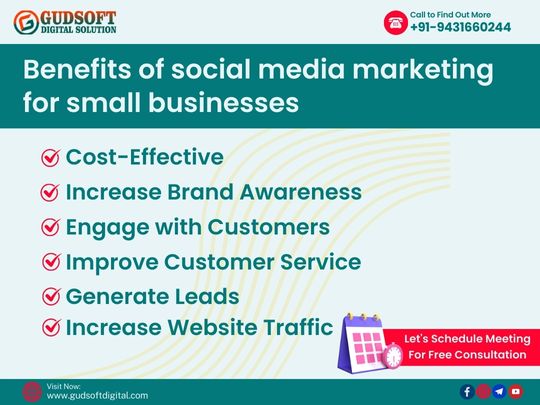
Cost-Effective
Social media marketing is one of the most cost-effective ways to reach out to potential customers. Small businesses often have limited budgets, and social media marketing offers them an opportunity to reach out to a large audience without spending too much money. Social media platforms like Facebook and Instagram offer businesses the option to create targeted ads that can be displayed to specific demographics, interests, and behaviors. It means that small businesses can use social media marketing to reach out more customers that are most likely to be interested in their products or services.
Increase Brand Awareness
Social media marketing is the best way to increase brand awareness. Social media platforms offer businesses an opportunity to reach out to a vast audience and create a brand image that resonates with their target audience. By creating engaging content and sharing it on social media platforms, businesses can increase their reach and connect with potential customers.
Engage with Customers
Social media marketing is a easiy way to engage with customers. Social media platforms like Facebook, Twitter, and Instagram offer businesses an opportunity to connect with their customers on a personal level. By responding to comments, sharing user-generated content, and providing valuable information, businesses can build trust with their customers and create a loyal fan base.
Improve Customer Service
Social media marketing is also an excellent tool for improving customer service. Social media platforms offer businesses an opportunity to respond to customer complaints, queries, and feedback in real-time. This means that businesses can address customer issues promptly and improve their overall customer experience.
Generate Leads
Social media marketing is an excellent way to generate leads. By creating engaging content and sharing it on social media platforms, businesses can attract potential customers to their website or landing page. This means that businesses can generate leads without spending a lot of money on traditional marketing channels.
Increase Website Traffic
Social media marketing can also help businesses increase their website traffic. By sharing content on social media platforms, businesses can direct potential customers to their website. This means that businesses can increase their website traffic and improve their search engine rankings.
Also Read: Benefits Of Social Media Advertising For Small Business
Conclusion
In conclusion, social media marketing is a cost-effective way for small businesses to promote their products or services. It offers businesses an opportunity to reach out to a vast audience, increase brand awareness, engage with customers, improve customer service, generate leads, and increase website traffic. Social media platforms like Facebook, Twitter, and Instagram offer businesses an opportunity to create targeted ads that can be displayed to specific demographics, interests, and behaviors. It means that small businesses can use social media marketing to reach out more customers that are most likely to be interested in their products or services.
Gudsoft Digital Solution is the best social media marketing agency because of their expertise, customized solutions, effective campaigns, transparency, and excellent customer service. They have a proven track record of helping businesses improve their social media presence and reach out to their target audience. If you are looking for a social media marketing agency that can help you take your business to the next level, look no further than Gudsoft Digital Solution.